
 +91-8920707042 / 8700245593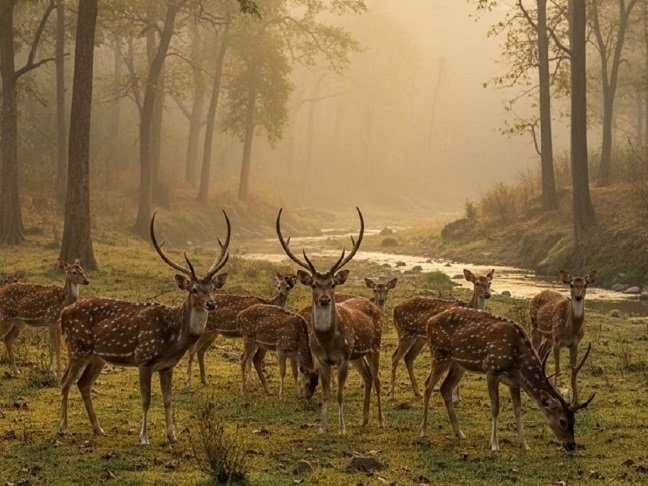
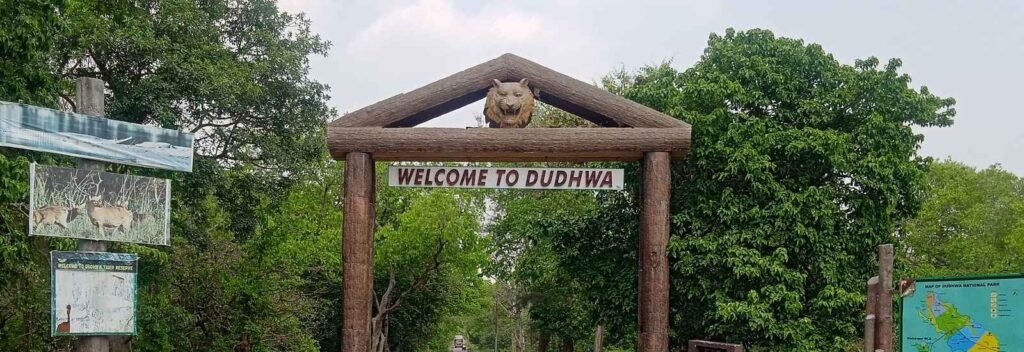
Dudhwa national park is one of the most rich ecological sceneries in North India that is not only rich in wildlife but also in the varieties as well as flourishing flora. The park is situated in the Terai region of the Indo-Nepal border and it is an important component of the Dudhwa Tiger Reserve. Its unusual mixture of forests, grasslands as well as wetlands brings about an equilibrium environment where abundant flora are supported. Dudhwa vegetation is important in sustaining biodiversity, climate regulation and a habitat and food source to millions of animal species.
Geographical Effect on Flora
Dudhwa National Park is very much affected by its geographical position called the Terai. The area is well-rainfed and fertile alluvial soil, which sustains thick vegetation. The flooding of the season by the local rivers also adds more nutritional value to the soil creating a habitat which supports various plant species. This level terrain with rich water bodies provides the perfect environment within which forests, grasslands and wetlands can co-exist to enable a rich and dynamic ecosystem.
Sal Forests – The Preeminent Vegetation
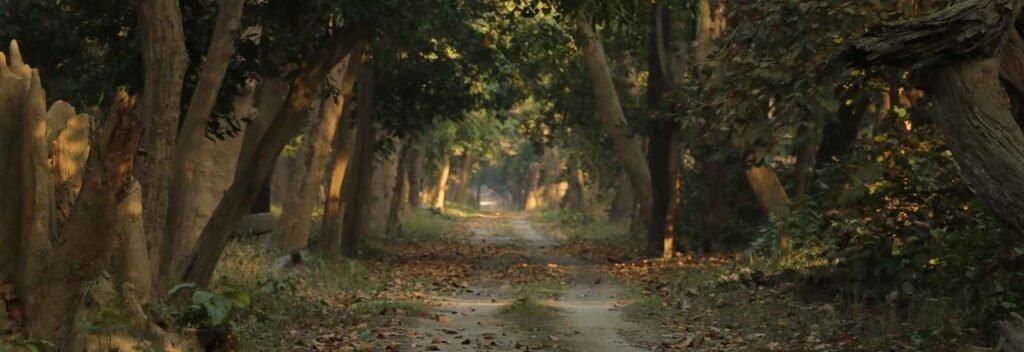
The vegetation of the Dudhwa National park is based on Sal (Shorea robusta) forests. These thick forests occupy a considerable area of the park and stabilize the environment of many species. Sal trees are characterized by straight and tall trunks and a dense canopy that forms a shadowy area beneath. It is a canopy that sustains numerous undergrowth such as herbs, grasses and shrubs.
Sal forests also play a key role in maintaining ecological balance since they assist in controlling temperature, preserving soil moisture and sheltering wildlife. These forests are the home to many animals such as deer and elephants which rely on it to find food and shelter.
Mixed Deciduous Forest and Tree Diversity
Dudhwa is also composed of mixed forests in addition to Sal forests, which contributes to the botanical diversity of Dudhwa. Such forests are teak, jamun, khair, semal, and banyan. All these trees play different roles in the ecosystem as they serve different purposes and food, shade and nesting place to different animals and birds.
Flowering and fruiting trees provide an attractant to insects, birds and mammals, forming a complicated food web. The forest is a visual and ecologically active place all year round due to seasonal changes that introduce changes in foliage.
Grasslands – The Lifeblood of Herbivores
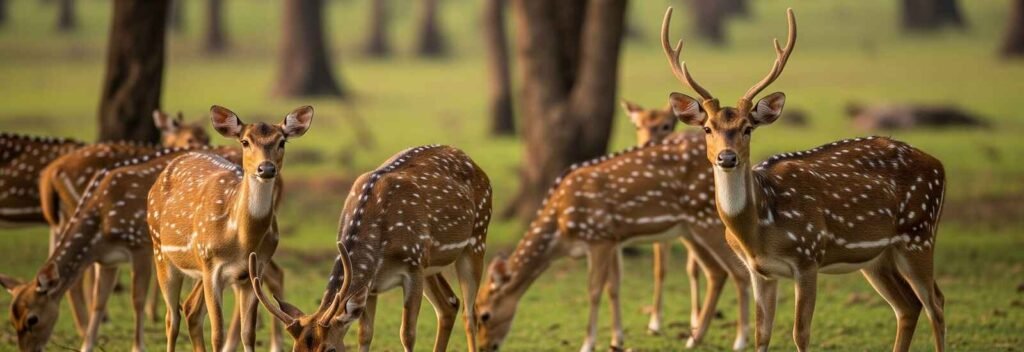
One of the most significant elements of Dudhwa ecosystem is grasslands or phanta as it is locally referred to. These open fields have high grasses that give grazing fields to herbivores like Barasingha, spotted deer and hog deer. Smaller mammals and ground nesting birds are also found on the grasslands.
Preservation of grasslands is vital in supporting the existence of numerous species. The grass can be regenerated by the process of controlled burning and natural processes, which will provide the herbivores with food continuously. The regions also provide the best wildlife view during jungle safari.
Wetlands and Aquatic plants
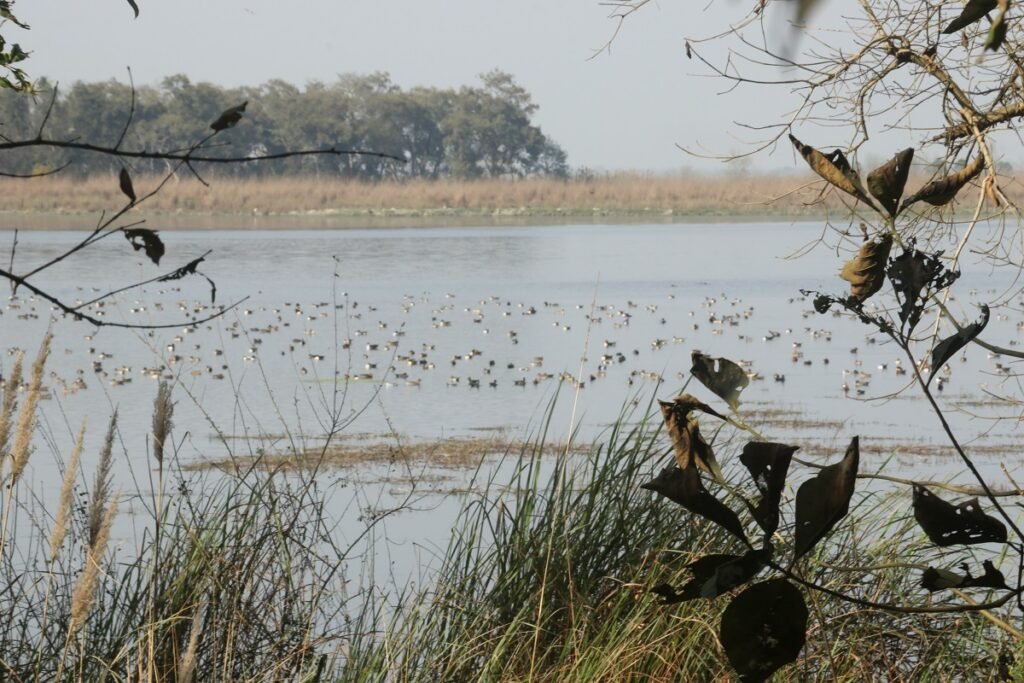
Another characteristic of Dudhwa National Park is wetlands. These regions consist of marshes, lakes and river systems which sustain numerous aquatic vegetation. These habitats are inhabited by vegetation like reeds, water lilies and floating plants.
Wetlands are important to the ecological balance, as they sustain bird life, water cycle regulation and fish and amphibian breeding. In winter these places are lively as they are visited by migratory birds.
Use of Flora to benefit Wildlife
Dudhwa is directly related to its flora which is closely connected with fauna. Forests help in sheltering and nesting, grasslands help in grazing and wetlands help in the provision of water and food. This is an interconnected system where most of the wildlife such as tigers, elephants and the Indian One-Horned Rhinoceros survive.
Another important part of the food chain is played by plants. Herbivores feed on leaves, fruits and seeds and contribute to carnivores. This equilibrium emphasizes the necessity to preserve vegetation in the park.
Medical Plants and Local Significance
Dudhwa National Park contains a number of medicinal plants which the locals have long used. The forest has herbs and shrubs which have been known to have healing powers and are used in traditional medicine. Such plants are not only ecologically important but also of cultural and economic importance to the local communities.
Vegetation Seasonal Change
Dudhwa National Park changes its flora according to the seasons, and one can have a different experience all year round. The forest is green and lush during the monsoon and the growth of plants is speedy. The winter season offers a combination of greeneries and arid areas and summer offers less foliages and more wildlife exposure.
Such seasonal changes are not only experienced to alter the appearance of the park but also to alter the behavior and habitat use of animals.
Flora Conservation in Dudhwa
The conservation activities in Dudhwa are aimed at the preservation of its various species of plants as well as ensuring ecological balance. Project Tiger and other projects provide initiatives that safeguard the habitat, manage invasive species and provide sustainable management of natural resources.
Forest authorities and conservationists collaborate to conserve vegetation, hinder deforestation, and encourage environmentally friendly tourism. These are necessary to conserve the biodiversity in the park.
Close to Ecosystems and Extended Flora
Dudhwa flora is not limited to the national park to include other nearby areas like Kishangarh Wildlife Sanctuary and Katarniaghat Wildlife Sanctuary. These regions have common ecological features and are part of the total biodiversity of the Terai region. The need to explore these areas gives a wider insight into the ecosystem and plant diversity.
Optimal Flora Exploration Time
The most appropriate season to visit flora of Dudhwa would depend on your interest. In the case of greenery, the post-monsoon season is the best. Winters have a moderate landscape and a comfortable weather whereas summer has better visibility of the plant structures and animals interaction. The vegetation in the park is different in every season.
Conclusion – A Thriving Green Ecosystem
Dudhwa National Park has a unique flora which contributes to a rich and diverse ecosystem. The park is a demonstration of the beauty and significance of plant life in preserving the ecological equilibrium with dense Sal forests and colorful grasslands and life-giving wetlands.
Knowledge and value of this vegetation does not only make your visit more interesting, but also brings to light the importance of conservation. Dudhwa is a living example of how nature flourishes when conserved and a green refuge to wildlife and an inspiration to visitors.

